Zoe Becker · 21 September 2026
The Hidden Benefits of Modular Design in Independent Note Platforms for Long-Term Data Management
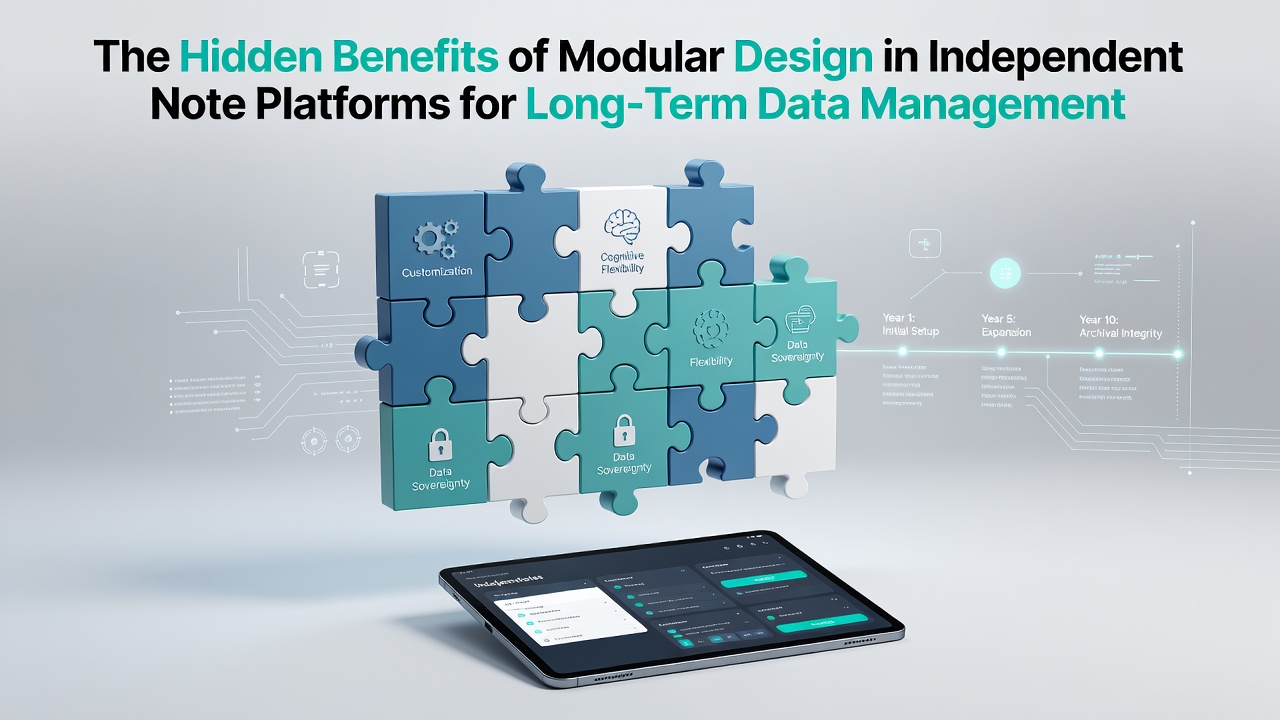
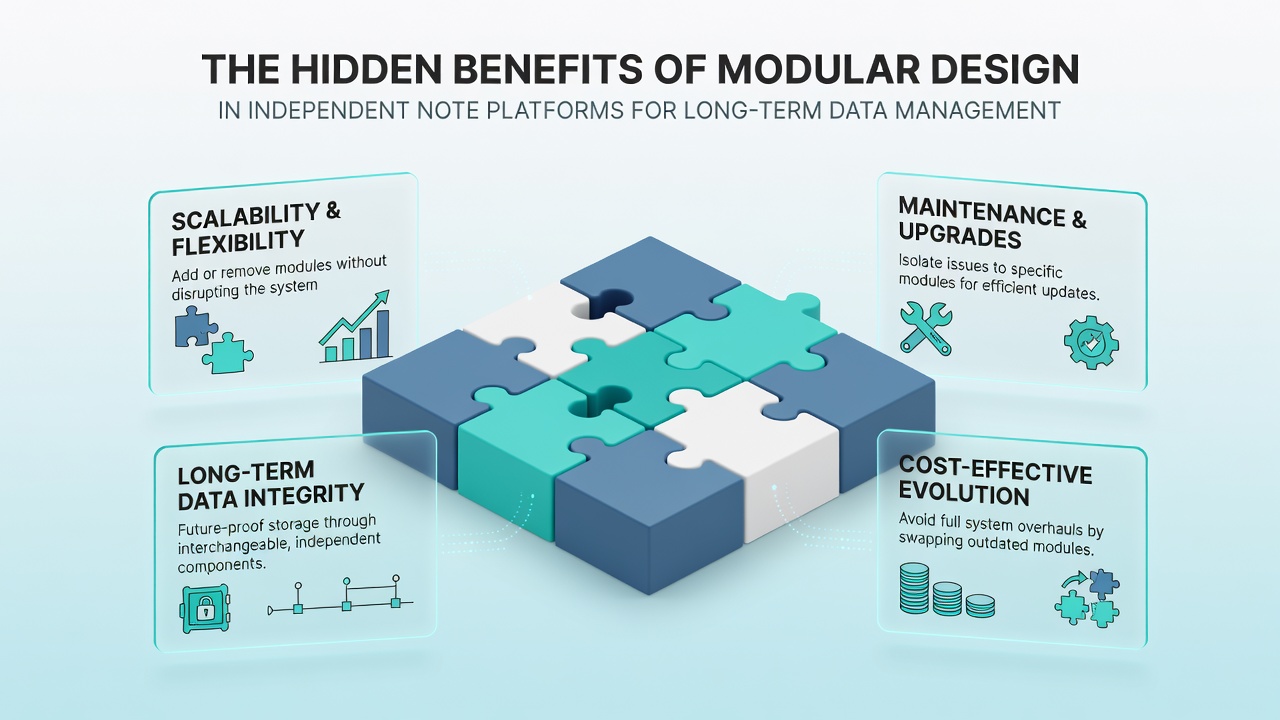
Independent note platforms have gained traction among researchers and professionals who require reliable systems for organizing information over extended periods, and modular design plays a central role in supporting these needs through flexible component structures that allow updates without full system overhauls. Observers note that this approach separates core functions such as storage, retrieval, and formatting into distinct modules, which enables targeted modifications while preserving overall data integrity across years of use. Data from various implementations shows that platforms built this way maintain accessibility even as underlying technologies evolve, since individual parts can be swapped or upgraded independently.
Core Principles of Modular Architecture in Note Systems
Modular design breaks down note platforms into self-contained units that handle specific tasks like text parsing, metadata tagging, and file synchronization, and this separation allows developers to refine one area without disrupting others. Researchers have documented how such structures reduce dependency risks, because a change in one module leaves the rest operational, which proves especially useful when managing archives that span decades. Studies from academic institutions indicate that users of these platforms experience fewer instances of data lock-in compared to monolithic alternatives, since export functions often operate at the module level for precise control over content transfer.
Those who have examined long-term deployments find that modularity supports incremental improvements in encryption protocols or indexing methods, and this adaptability keeps systems compatible with new hardware or operating environments. Evidence suggests that platforms following this pattern handle growing datasets more efficiently, as modules can scale individually based on demand rather than requiring complete rebuilds.
Advantages for Sustained Data Accessibility
Long-term data management benefits from modular setups because components responsible for file formats or backup routines can be updated to meet emerging standards without altering the entire note collection. According to guidelines issued by the National Institute of Standards and Technology on data interoperability, systems that incorporate modular elements demonstrate improved migration success rates during technology transitions. This capability becomes relevant in September 2026, when several independent platforms plan to align with updated archival protocols that emphasize component-level compatibility.
Users often discover that modular designs facilitate better version control across notes, since each module maintains its own revision history that integrates cleanly with the others. Data shows fewer corruption events in such environments, because isolated failures remain contained rather than propagating through the whole platform. Experts have observed that organizations relying on these tools for research archives report higher retention rates over multi-year periods, thanks to the ease of refreshing outdated modules while keeping historical content intact.
Enhanced Portability and Integration Options
Independent platforms using modular design offer superior options for moving data between tools or services, because export and import functions reside in dedicated modules that support multiple formats simultaneously. Reports from research bodies in Canada highlight how this setup minimizes friction during cross-platform transfers, allowing users to maintain continuity in their workflows even after switching providers. The reality is that such flexibility supports collaborative environments where different teams employ varied note applications yet need to exchange information seamlessly.
Integration with external databases or analysis tools also improves under modular frameworks, since specific modules can be extended or connected via standardized interfaces without affecting core note functions. Figures from industry analyses reveal that platforms with this architecture achieve faster adoption of new features like AI-assisted tagging, as those capabilities arrive as optional modules rather than core replacements. And this targeted rollout keeps existing data structures stable throughout the process.
Practical Outcomes in Extended Use Cases
Take one research group that transitioned its note archives to a modular platform several years ago, and the team found that routine maintenance required significantly less downtime because updates targeted only affected modules. Observers note similar patterns in educational settings, where institutions manage large volumes of student notes across changing academic years, and the design allows for periodic enhancements to search capabilities while preserving older records unchanged. What's interesting is how these systems handle regulatory shifts in data handling, since modules dedicated to privacy controls can be revised independently to comply with new requirements from various jurisdictions.
Evidence from multiple deployments indicates that modular note platforms reduce overall storage overhead through optimized modules that compress or deduplicate content without impacting retrieval speeds. This efficiency compounds over time, particularly for users who accumulate extensive personal or professional knowledge bases that must remain searchable for decades.
Conclusion
Modular design in independent note platforms delivers measurable support for long-term data management by enabling precise updates, reliable portability, and sustained compatibility across evolving technical landscapes. Organizations and individuals who adopt these systems gain practical advantages in maintaining accessible archives, as documented in various technical reports and implementation studies. The approach continues to shape how note platforms evolve to meet ongoing demands for durable information handling.