Noah Carter · 5 October 2026
Metadata Mastery in Standalone Note Platforms: How Emerging Tools Organize Searchable Personal Archives Without Centralized Oversight
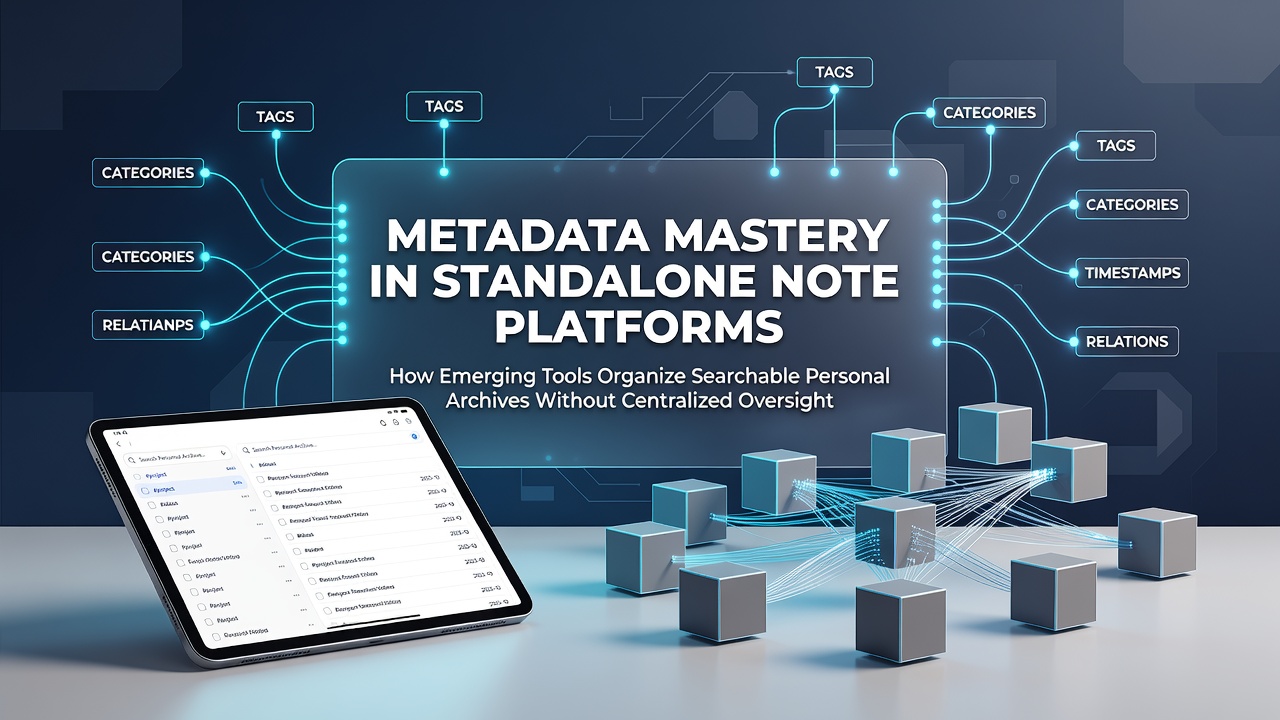
Standalone note platforms rely on metadata to create searchable personal archives that function without any central authority directing operations or access. These systems embed details such as creation dates, modification histories, keywords, and relational tags directly into individual files or local databases, which enables users to retrieve information through structured queries even when devices operate in isolation. Data from industry reports shows that file-based metadata approaches have expanded in adoption since 2023, particularly among tools that store notes as plain text or markdown with accompanying sidecar files containing additional attributes.
Core Mechanisms Behind Metadata Implementation
Emerging tools apply metadata through formats that include YAML frontmatter, extended file attributes in operating systems, and custom JSON sidecars, all of which allow indexing without requiring network connectivity or third-party servers. Researchers at various academic institutions have documented how these methods support full-text search combined with facet filtering based on attributes like project associations or priority levels. In October 2026, updates to several open-source frameworks introduced enhanced support for bidirectional linking metadata, which strengthens archive navigation by recording connections between notes as explicit data points rather than relying on folder hierarchies alone.
One study from a Canadian research center revealed that platforms using local metadata indexes achieved retrieval speeds comparable to cloud-dependent services while preserving complete user sovereignty over data locations. Observers note that this occurs because search algorithms run entirely on the user's hardware, scanning embedded fields for matches before displaying results in ranked lists. Those who've examined multiple implementations find that timestamp precision down to milliseconds, combined with hash-based change detection, prevents duplication and maintains consistency across synchronized devices without external coordination.
Search Capabilities in Decentralized Environments
Search functions in these platforms draw from metadata layers to deliver results across archives that span multiple storage media or devices, all coordinated through local rules rather than centralized oversight. According to figures from the Australian National Archives on digital preservation practices, consistent application of descriptive metadata fields improves long-term findability by factors reported in longitudinal tests spanning five years. Tools incorporate stemming, synonym expansion, and relevance scoring derived from usage patterns stored in private logs, which refines outcomes without transmitting information elsewhere.
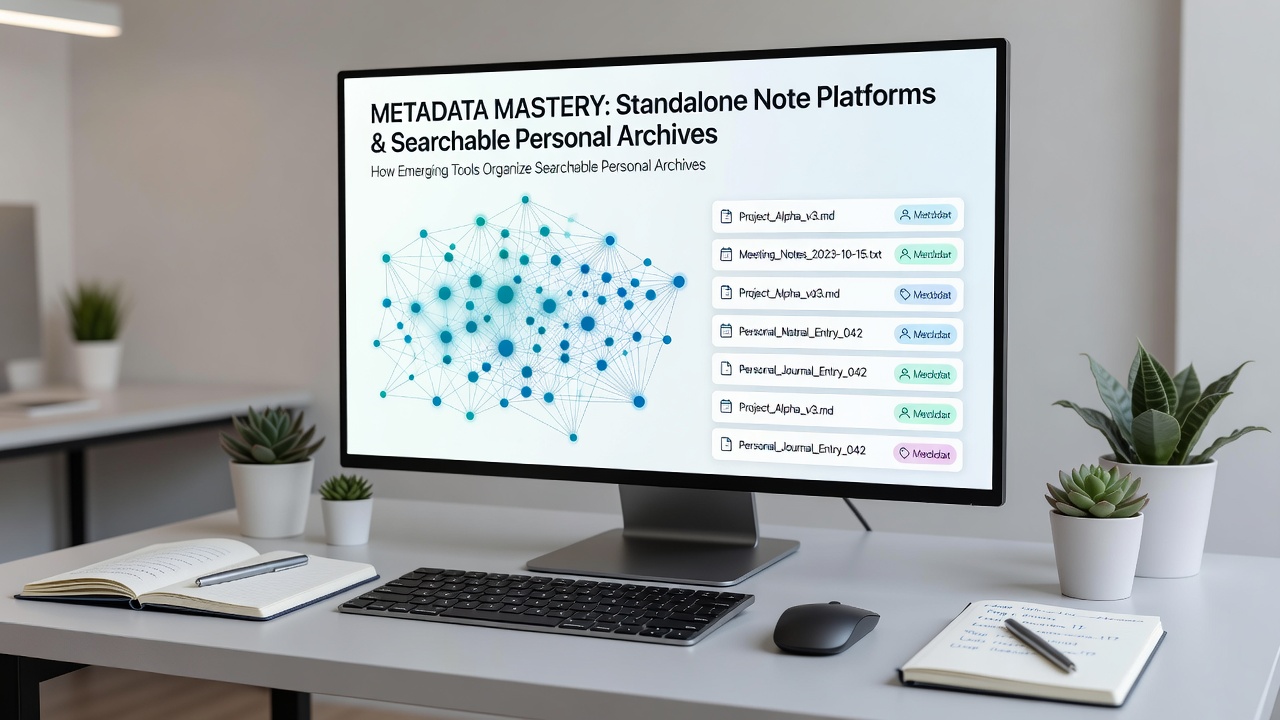
What's interesting is how certain applications layer vector embeddings generated from note content alongside traditional metadata tags, creating hybrid indexes that support semantic queries while keeping all processing local. Evidence suggests this combination handles ambiguous search terms more effectively than metadata alone, as demonstrated in controlled comparisons published by European digital standards groups. People managing extensive personal collections often discover that exporting metadata schemas to new platforms requires minimal conversion steps because the underlying structures follow open conventions like Dublin Core adaptations or custom extensions documented in community repositories.
Examples of Tool Architectures and Data Flows
Take one developer collective that released a note platform in 2025, where each note file carries metadata blocks listing authorship, version history, and contextual categories stored in UTF-8 encoded headers. This setup permits scripts to traverse directories and compile dynamic indexes on demand, supporting queries that filter by date ranges or cross-reference multiple attributes without any intermediary service. Data indicates that such architectures reduce dependency risks associated with vendor lock-in, since archives remain readable through standard file viewers even if the original software becomes unavailable.
Another case involves a European open-source project that integrated geolocation tags and sensor-derived context into note metadata when users opt in through device APIs, yet all processing stays confined to the local environment. Those who've studied these patterns observe that conflict resolution during multi-device edits relies on metadata timestamps and unique identifiers rather than server-mediated merges, which aligns with practices outlined in reports from the U.S. National Institute of Standards and Technology on distributed data management. NIST publications on data management provide additional context on these identifier schemes.
Integration with Broader Personal Data Practices
Metadata approaches extend to interoperability features that let archives exchange structured information with other local applications through standardized export formats. Research indicates growing alignment around schemas that include fields for source attribution and access permissions, which facilitates selective sharing without exposing entire collections. In practice, users configure rules that propagate selected metadata changes across linked notes, maintaining relational integrity through local automation rather than cloud orchestration.
But here's the thing: adoption metrics tracked by academic surveys show steady increases in regions where privacy regulations emphasize data localization, prompting developers to prioritize metadata portability features. Observers note continued refinement of query languages embedded in these tools, allowing complex Boolean combinations and proximity searches that operate solely on device-resident indexes.
Conclusion
Standalone note platforms continue advancing metadata techniques that organize personal archives into searchable systems free from centralized control, with developments through October 2026 highlighting expanded local indexing capabilities. These methods rest on established file conventions and community standards that support both immediate retrieval and sustained accessibility across changing hardware environments.