Nils Franke · 7 September 2026
Exploring Annotation Ecosystems: How Independent Platforms Handle Data Portability and User Control
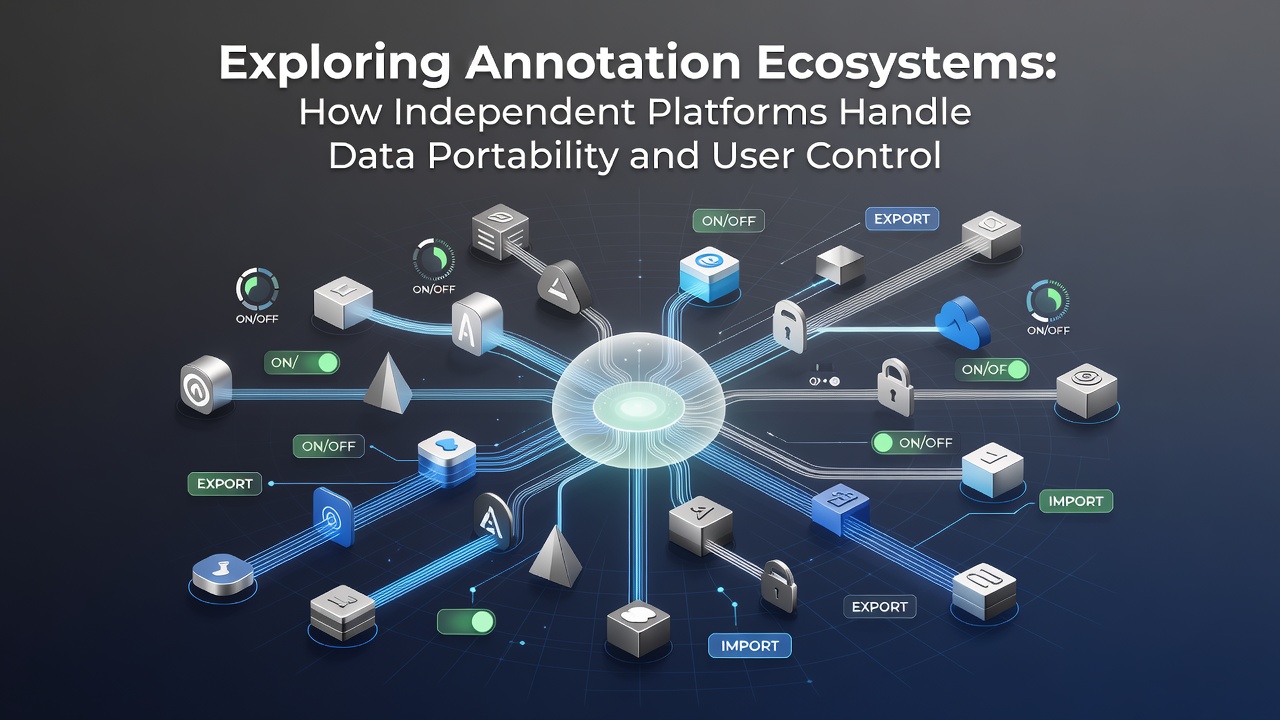
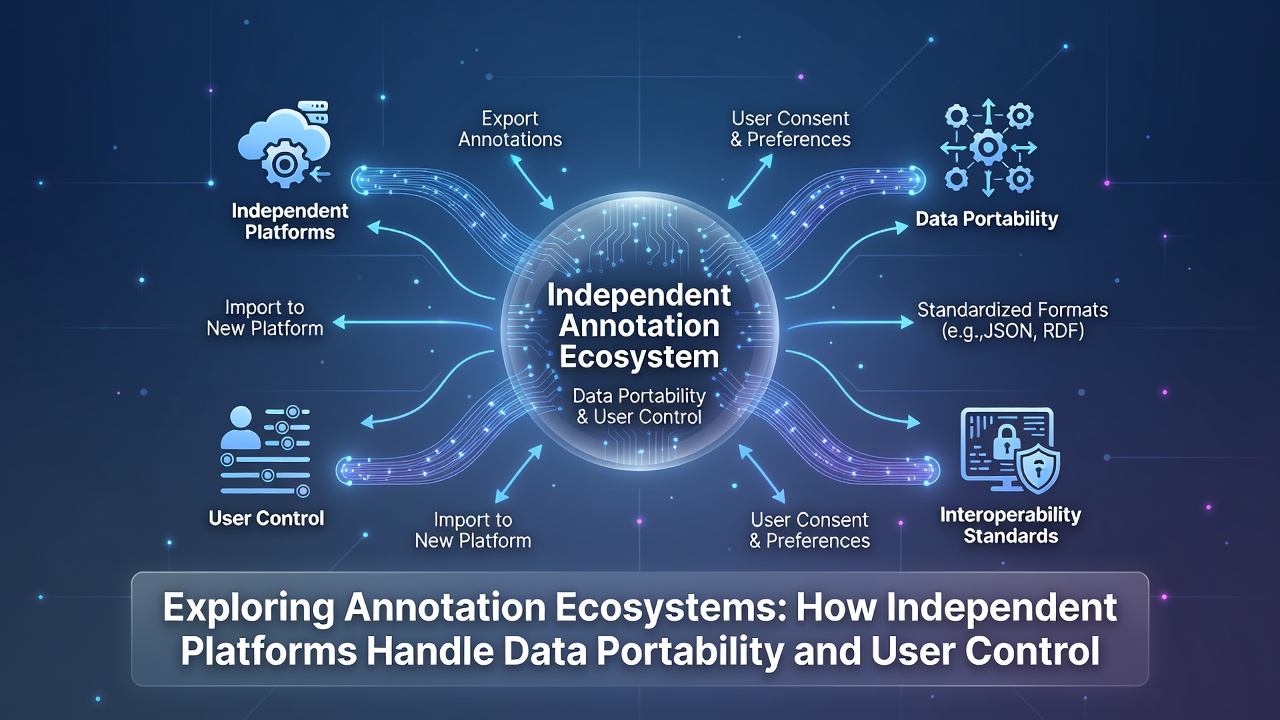
Annotation ecosystems consist of tools and services that allow users to add highlights, comments, and notes to web content while maintaining ownership over those additions, and independent platforms in this space focus on standards-based approaches that support export options and granular permissions. Data portability refers to the ability to move annotations between services without loss of structure or metadata, whereas user control encompasses settings for visibility, retention periods, and deletion rights that platforms must implement to comply with various regulations.
Core Components of Independent Annotation Systems
Independent platforms build their systems around the W3C Web Annotation Data Model which defines a JSON-LD format for storing target selectors, body content, and provenance information so that records remain machine-readable across different environments. Researchers have documented how these platforms separate the annotation storage layer from the hosting service itself, allowing users to choose self-hosted repositories or third-party vaults while the annotation client continues to function through API calls. Observers note that this separation creates pathways for portability because the data model stays consistent regardless of where the records physically reside.
Mechanisms for Data Portability
Export functions on these platforms typically generate files in the Web Annotation format or in CSV and JSON variants that include timestamps, selectors, and tags so that users can import the same records into another compliant service without manual reformatting. Some providers integrate direct transfer protocols that let one platform push a user's annotations to another after authentication through OAuth flows, and this method reduces the risk of data corruption during the move. Studies from academic institutions show that platforms adopting the full W3C model achieve higher success rates during imports because selector offsets and contextual snippets remain intact.
Standards and Interoperability Efforts
The W3C Web Annotation specification provides the foundational vocabulary that multiple independent services reference when building their export pipelines, and this shared reference reduces fragmentation across tools. In September 2026 several working groups plan to release updated profiles that add support for encrypted annotation bodies and time-based access tokens, changes that would further strengthen portability while preserving user control over sensitive notes.
User Control Features Across Platforms
Granular permission systems let users set individual annotations to private, shared with specific groups, or fully public, and these settings travel with the data during export so that downstream platforms inherit the original restrictions. Deletion tools often include options to remove annotations from the local store only or to issue requests that propagate removals to any cached copies held by partner services. Data from regulatory filings indicates that platforms offering these layered controls experience fewer user complaints about unintended sharing.
Regulatory Influences on Platform Design
Frameworks such as the EU's GDPR and Canada's PIPEDA require that users receive copies of their personal data in a structured format, prompting independent annotation services to build automated export schedulers that deliver monthly archives upon request. Australian privacy guidance similarly emphasizes the right to erasure, leading platforms to implement cascading delete functions that remove references across linked services. Observers note that these overlapping requirements have pushed developers toward common technical patterns for consent management and audit logging.
Case Examples of Implementation
One platform integrated with Solid pods so that annotations reside in user-controlled storage pods while the client interface remains hosted separately, and this architecture lets individuals switch providers by simply updating the pod endpoint. Another service built a connector that maps its internal schema directly to the W3C model, enabling one-click transfers to research repositories that accept the same vocabulary. Researchers have examined these setups and found that the combination of open data models with user-hosted storage correlates with higher retention of annotation history over multi-year periods.
Technical Challenges and Solutions
Selector drift occurs when web pages change their DOM structure, breaking the link between an annotation and its target, yet platforms address this through snapshot storage of page text or through fallback CSS selectors that increase resilience. Versioning systems keep track of annotation revisions so that users can revert changes or compare edits before deciding which version to export. Those who have studied migration logs report that platforms providing preview functions before transfer reduce errors in the receiving service.
Conclusion
Independent annotation platforms address data portability through adherence to open models like the W3C specification and through export formats that preserve context and metadata. They manage user control via permission layers, deletion propagation, and integration with user-hosted storage options. Regulatory requirements across regions continue to shape these features, and upcoming updates scheduled for September 2026 are expected to introduce stronger encryption and token support that will further align technical capabilities with user expectations for ownership and mobility of their annotations.